
LONDON PROPERTY CARE
Mould Remediation Limehouse
If mould becomes visible after water damage, we help connect the incident, the repair history and the affected finish. Our Limehouse service discussion separates surface remediation from finding or repairing an active water source.
Water-source repairs and remediation are discussed distinctly.
- Review the incident and repair dates
- Assess the remaining surface concern
- Coordinate treatment with other work
We start with what happened and what was repaired
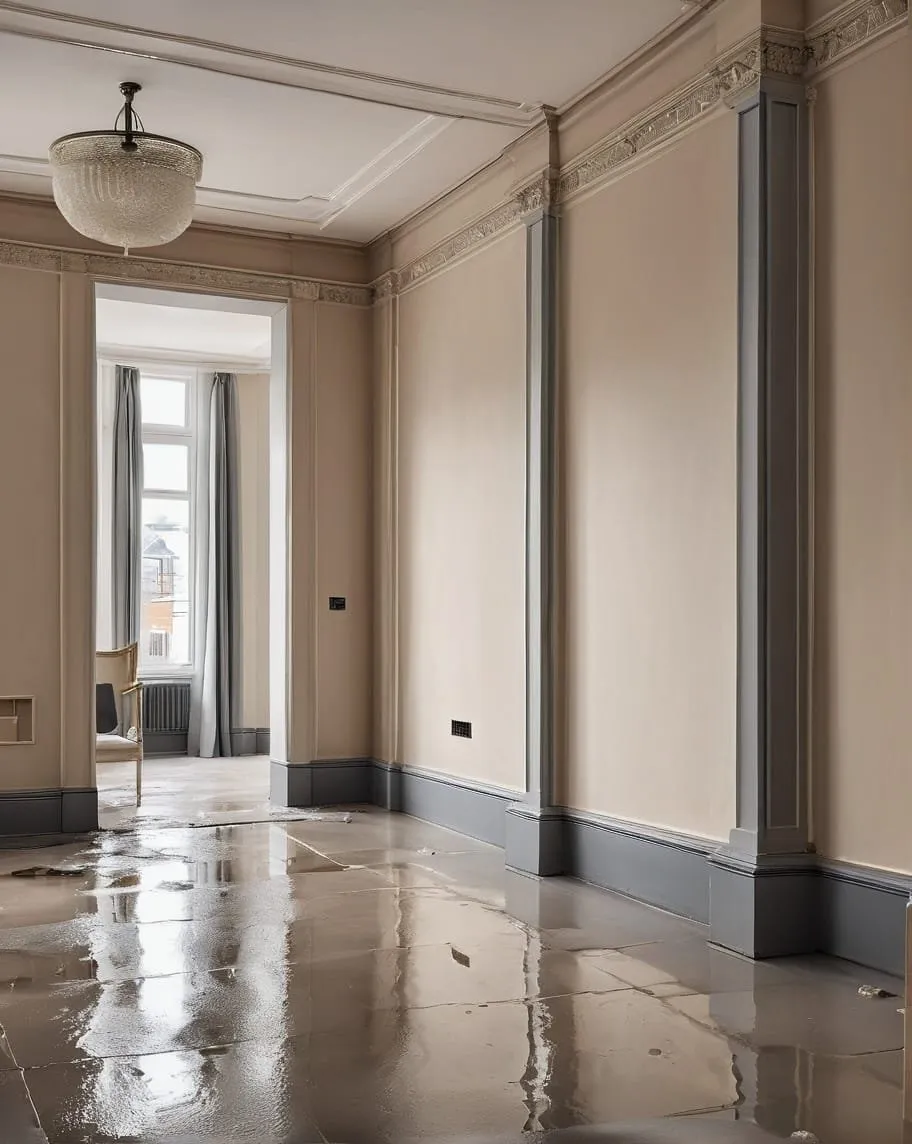
After a leak, the room can pass through several stages: the initial incident, source repair, drying discussions and changes to decoration. We ask which stage your Limehouse property has reached. Tell us when water was noticed, what repair was completed and what still concerns you now. We do not assume a repair date proves every affected material is ready for the next task. Nor do we treat an old incident as evidence that water continues to enter. Separating those facts helps us discuss remediation around the current condition, instead of offering a visit that answers a question you have already resolved elsewhere.
An active water source needs its own arrangement
If water is still entering or a leak is suspected, explain that before booking surface treatment. Our moisture detection service can be discussed where urgent investigation is the concern, but mould remediation is not automatically plumbing or building repair. We help clarify which service you are asking for and the available scope. You should know which person or contractor is responsible for addressing the source. This is especially useful if the incident involved another property or a shared area. A plan that leaves ownership of the repair unclear can result in fresh decoration while the water question remains unresolved.
We assess the finish left by the incident
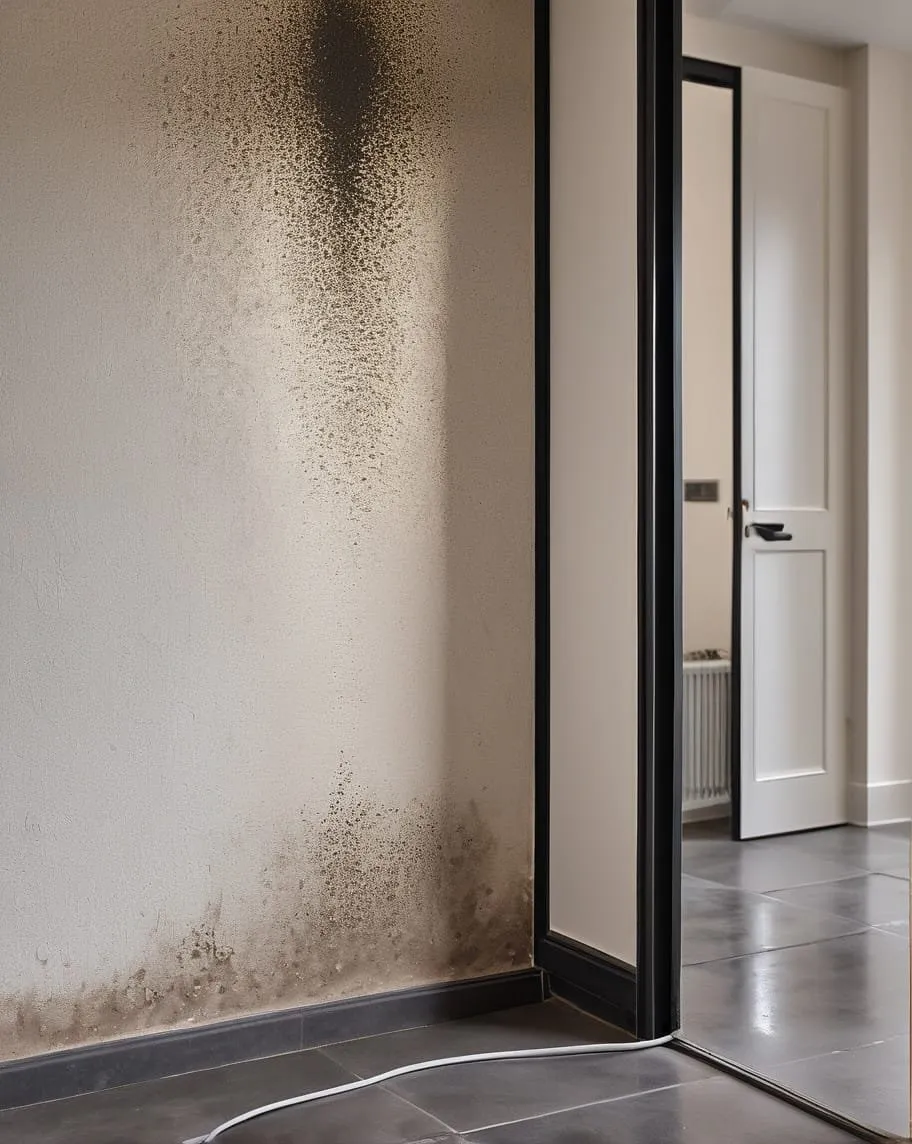
We consider the accessible materials showing growth or deterioration, including how the affected area relates to the reported water path. Describe whether paint, plaster or paper has changed, and whether the pattern extends beyond the initial wet mark. The wall treatment service explains why damaged finishes may need a separate repair decision. We do not ask you to open a concealed space simply to prove the extent. Where access limits the assessment, that limit should be understood. The current visible surface gives a starting point for the work, while any hidden material concern needs its own properly arranged access and scope.
Moisture assessment can answer the remaining question
A repaired source and a marked wall are two parts of the history, not a complete explanation of the present condition. Where the uncertainty concerns moisture in accessible materials, a damp and moisture inspection may be appropriate. We ask what you need to establish before treatment or decoration is arranged. Available readings should be understood with material condition and history, rather than used as a universal pass or fail. If the visit cannot settle every concern, we explain what remains outside its scope. That gives you a practical way to organise the next enquiry instead of relying on a confident guess about hidden areas.
We agree how remediation fits into the repair sequence
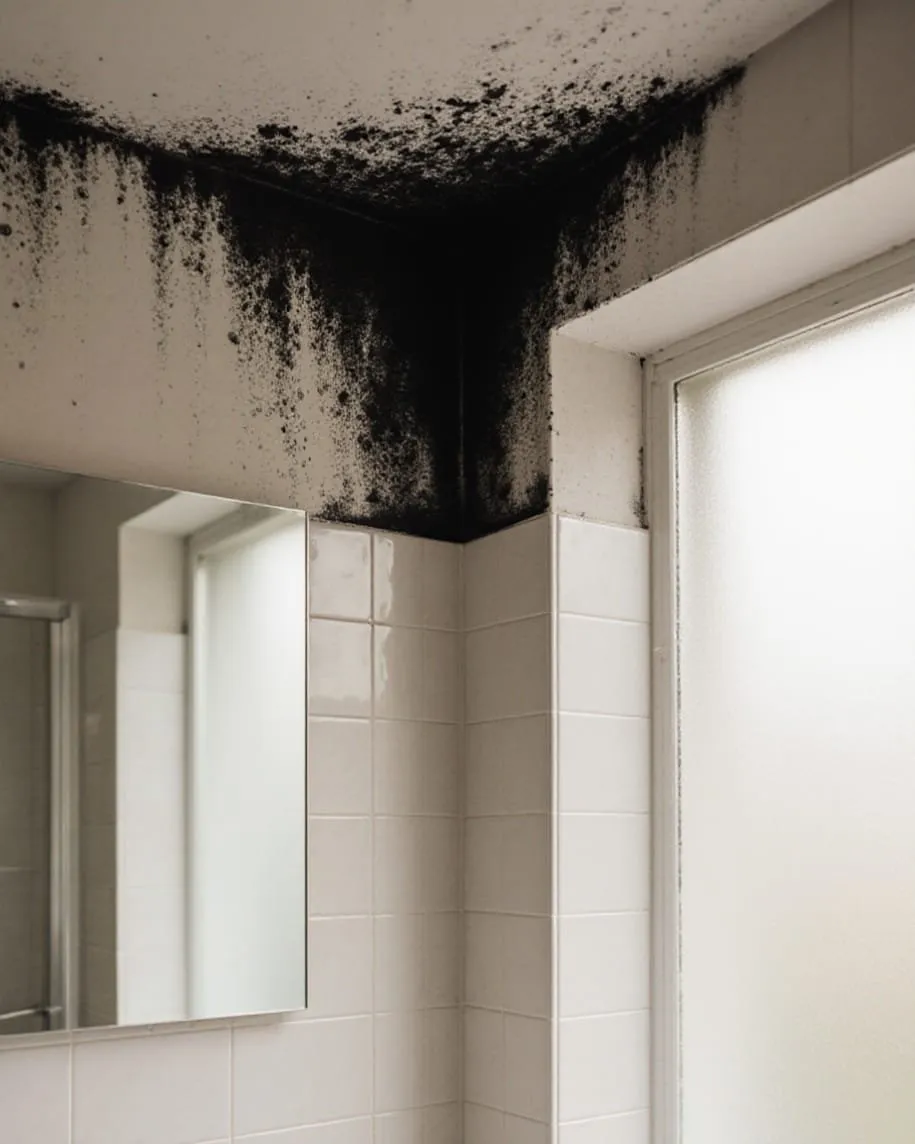
Remediation can include suitable anti-fungal applications to the affected surfaces after the material and current conditions have been considered. We explain the proposed treatment alongside the incident history. This makes the surface task tangible without suggesting that an application repairs a leak or answers every remaining moisture question.
The proposed treatment should identify which affected surfaces are included and any preparation needed. Discuss other planned work so that visits do not conflict or repeat tasks unnecessarily. Our mould removal information distinguishes visible growth treatment from wider restoration. If the ceiling or wall needs material repair, confirm who will arrange it and when the condition can be reviewed for the next stage. We explain the treatment boundary before agreement. You can then compare the scope with another proposal without assuming that two quotations include the same incident-related repairs, decoration or inspection of connected building spaces.
Why keeping the incident record improves the outcome
Our approach joins the service decision to the history of the actual damage. It helps avoid both ignoring a known incident and assuming every later mark has the same cause. Keep photographs from before and after repairs, any available findings and the dates of completed work. For a Limehouse follow-up enquiry, explain what is new rather than sending the original image again. We can discuss the changed surface against that record. If a different room is now affected, say so clearly. The maintenance conversation becomes more useful when treatment, water repair and decoration remain identifiable tasks rather than one vague entry saying the damp was done.
Nearby service enquiries
We also take enquiries in the surrounding areas. Call with the property’s address and affected rooms.
QUESTIONS FOR THIS VISIT
Before making arrangements
Can I book removal while a leak is active?
Tell us that the source remains active before making arrangements. We can discuss the appropriate enquiry, but surface remediation does not automatically include stopping water entry. The sequence needs to reflect the unresolved source.
Does a repaired leak mean the room is ready for painting?
A source repair alone does not establish the condition of every affected finish. Discuss the accessible surface, remaining moisture question and material repairs before asking a decorator to proceed on that assumption.
Will you inspect the flat above?
Only areas with suitable permission and agreed access can be included. Explain connected-property concerns early. We do not claim to have assessed a source beyond the spaces that the visit can actually cover.
Which incident records help most?
Dates, the location of water damage, what was repaired and changes afterwards are useful. Keep the original photographs, but add current wider views so the present surface concern is not confused with the earlier incident.
Is leak detection the same as mould treatment?
No. Detection concerns understanding a moisture source; remediation concerns the affected growth and surfaces within an agreed scope. We discuss which question needs answering so the service arrangement matches the work you expect.
Explain what remains after the water repair
Tell us the incident date, what has been repaired and which surfaces now show growth. We can discuss a Limehouse visit around the current question and make the relationship between assessment, remediation and restoration clear.