LONDON PROPERTY SERVICES

Rising Damp Investigation London

Damage low down on a wall can raise a question about rising damp, but the position alone does not prove the cause. We investigate the evidence before discussing possible next steps.

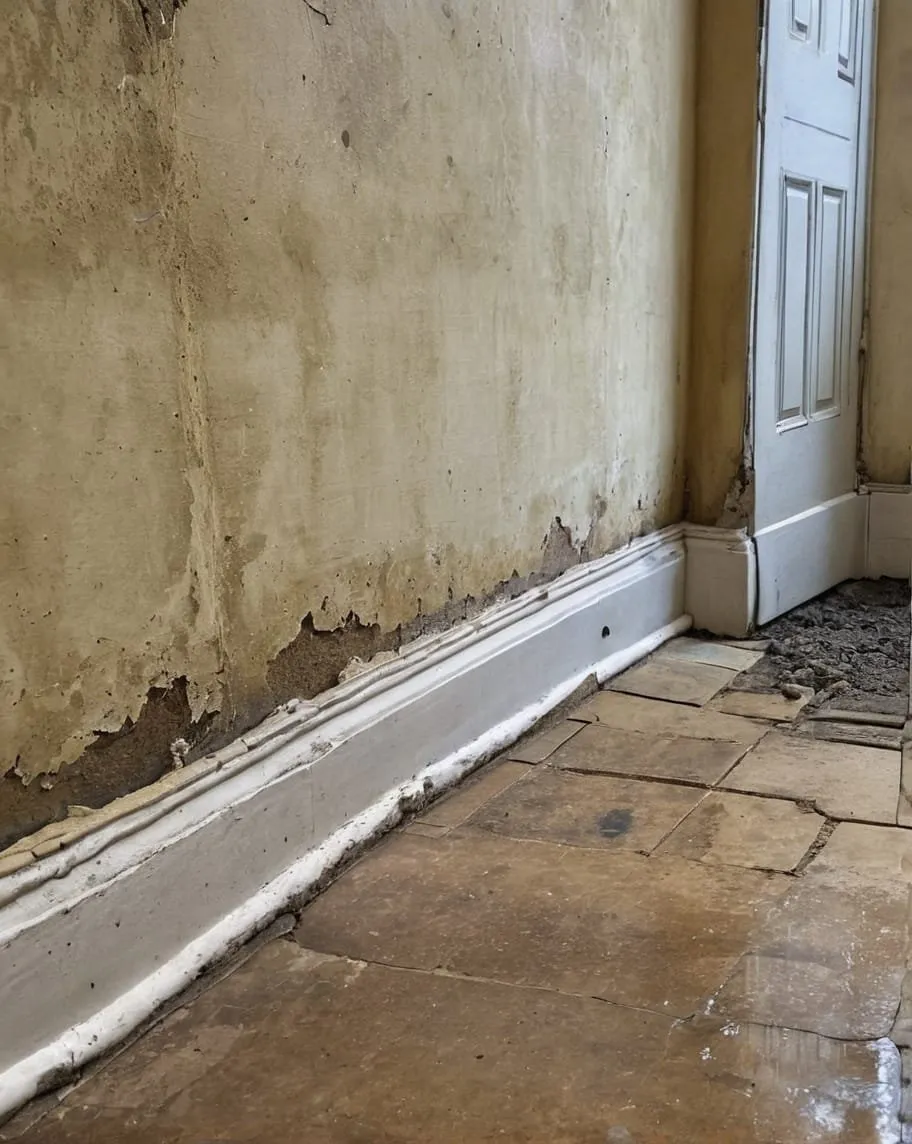
Damaged lower wall finish above a skirting board
  • Investigate low-level damage
  • Consider alternative moisture sources
  • Choose repairs from the evidence

ON THIS PAGE

Do not diagnose a wall from one sign

Peeling paint, damaged plaster or marks close to a skirting board can be worrying. People often describe any low-level moisture as rising damp, especially in an older building. Yet leaks, external moisture and other conditions can also affect the bottom of a wall. A useful investigation begins by considering these possibilities rather than accepting the first label attached to the damage.

Our rising damp investigation service is available for London residential and commercial properties. The purpose is to examine the concern and help you understand the evidence. Investigation is distinct from carrying out a damp-proofing treatment. We discuss the findings and any need for further checks before you commit to a repair based only on surface appearance.

The height of a mark does not prove rising damp. Our Hendon lower-wall guide explains what to record before assigning a cause. Where marks change after rain and an exterior check is pending, the Woodford exterior-check guide keeps the internal assessment and unanswered source question clear.

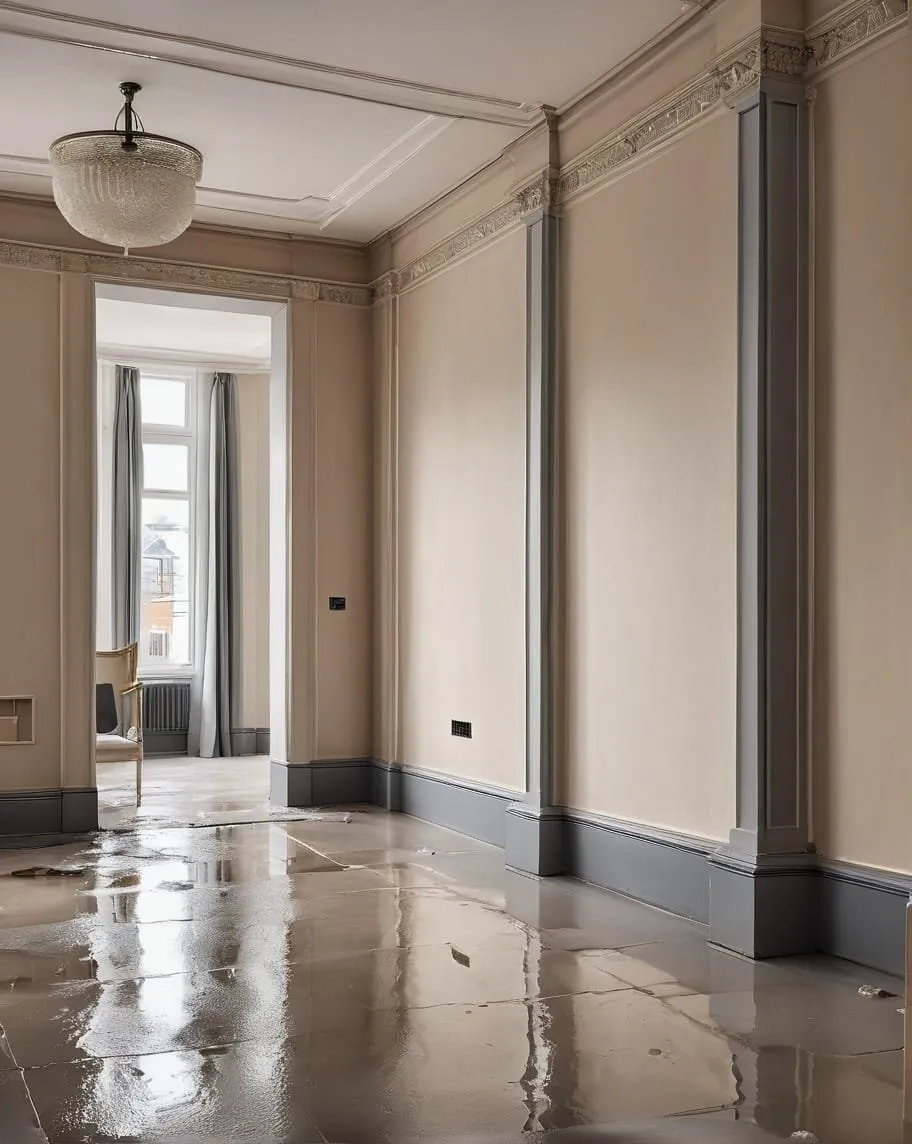
Water across a tiled floor in a room with decorative wall trim

What rising damp means

Rising damp describes moisture moving upwards through building materials from the ground. Whether that explanation fits a particular wall depends on the building and the evidence. The condition of lower finishes, the moisture pattern and surrounding details may all be relevant. None should be treated as a stand-alone shortcut to a diagnosis.

It is especially important to consider other sources where plumbing, external ground levels or previous building changes may be involved. Tell us about leaks, floor work, additions and earlier damp treatment. A recent repair can affect what is visible without settling the original cause. We look at the history as part of the investigation rather than assume that an old treatment record proves the current problem.

Why moisture readings need context

A moisture reading can help an assessment, but it is not a complete account of how water entered a wall. The material and the place being measured matter. Findings need to be interpreted alongside the visual pattern, accessible building details and other observations. You should understand what a reading suggests and what it cannot establish by itself.

An investigation may have limits where areas are concealed, access is restricted or earlier finishes obscure the surface. We explain those limits and whether another check is needed. This is more useful than presenting a confident repair recommendation when important parts of the building have not been examined. Ask which observations support the conclusion and which possible explanations remain open.

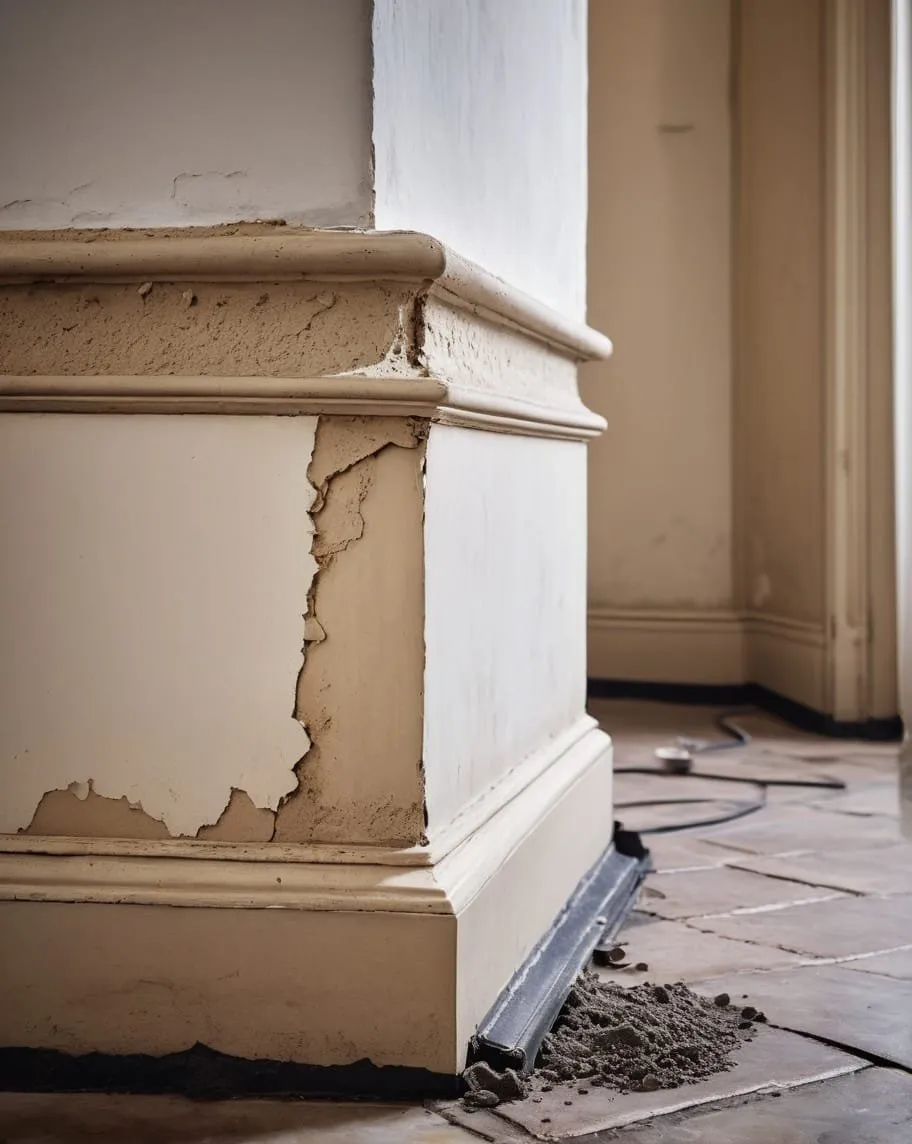
Cracked plaster on an interior architectural feature

THE PROPERTY IN CONTEXT

Look beyond the visible mark.

The affected material, the location and the history of moisture all help guide the next step. Tell us how the area has changed and what repairs have already been attempted.

Preparing the building history

Gather photographs showing the affected wall over time, particularly if the damage changes with weather. Note when you first noticed it and whether it has spread. Include any previous survey or treatment information, even if you are uncertain how accurate it was. Knowing what has already been attempted helps avoid repeating an assumption without reviewing the evidence.

Explain whether the wall is internal or external and whether adjoining areas are accessible. In a ground-floor flat, a shared space or neighbouring property may be relevant. Permission might be needed to inspect beyond your own room. You do not need to remove plaster or lift floors before making an enquiry. Discuss any need for additional access or further investigation before disturbing the building.

Separating findings from repair choices

If the evidence points towards a moisture problem requiring building work, you should understand the reasoning behind the recommendation. Ask what the work is intended to address and whether another trade or specialist is needed. An investigation does not automatically include installing a damp-proof course, replacing plaster or carrying out structural repairs.

It can be helpful to plan the sequence. The source of moisture may need attention before finishes are restored. Decoration should not be used to hide a concern that remains unresolved. Equally, extensive work should not be chosen simply because low-level damage looks familiar. We aim to give you a clear explanation of the observed conditions and the appropriate next question to answer.

When another service is more relevant

If a patch appears after rain, penetrating damp inspection may be the better route. If the cause is broad or unclear, a damp survey can look at the wider moisture concern. Where visible mould is also present, wall treatment may form a separate part of the plan. These services answer related questions, but they should not be treated as interchangeable labels for the same work.

Pricing depends on the property, the areas included, available access and the agreed investigation. Tell us if you require written findings for a landlord or managing agent. The purpose and format should be discussed before booking. A general assessment is not automatically a structural report, a legal opinion or an insurance document, and it is better to establish those requirements at the outset.

Rising damp investigation questions

Does damaged skirting prove rising damp?

No. Its condition is useful evidence, but several moisture sources can affect that part of a room. The surrounding wall and building history need consideration.

Does the service include damp-proofing work?

This page concerns investigation. Any treatment or repair should be agreed separately, with the scope and the reason for the recommendation made clear.

Can an earlier survey be reviewed?

Tell us what documents you have and why the concern remains. Previous findings can provide background, but the present condition of the building still needs attention.

Discuss your London property

Call with your location, the affected rooms and the history of the concern. We’ll discuss the appropriate next step and the scope you need.