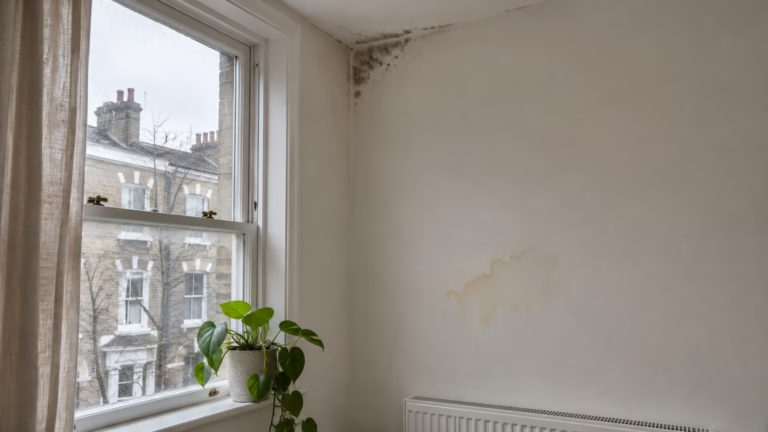
Diagnosis & Assessment
Why Does Mould Keep Coming Back After Cleaning?
Recurring mould usually means the surface is becoming damp again. Learn how to read the pattern, check moisture routes and plan a lasting response.

Cleaning removes a mark, not necessarily its cause
A patch disappearing after cleaning can feel like the end of the problem. When it returns in the same place, the useful question is what has kept that surface damp. Mould needs moisture to grow. Removing visible growth changes the surface, but it does not repair a leak, warm a cold corner or improve an extractor that is failing to clear humid air. A recurring patch therefore deserves an investigation of the room and the building, rather than another cycle of cleaning and repainting. The location, timing and condition of nearby materials offer better clues than the colour of the mark alone.
Look for a pattern before choosing a remedy
Begin with a short record. Note the first date you noticed the patch, how quickly it returned after treatment and whether it is spreading. Photograph the whole wall as well as the affected area, keeping a doorway or window in frame for context. Write down whether the surface feels unusually cold, whether paint is lifting and whether staining appears after rain. A mark behind a wardrobe that worsens in winter points to different questions from a stain beneath a bathroom that grows after somebody uses the shower. None of these observations proves a cause by itself; together they help make an inspection more focused.
Condensation can repeatedly wet a cold surface
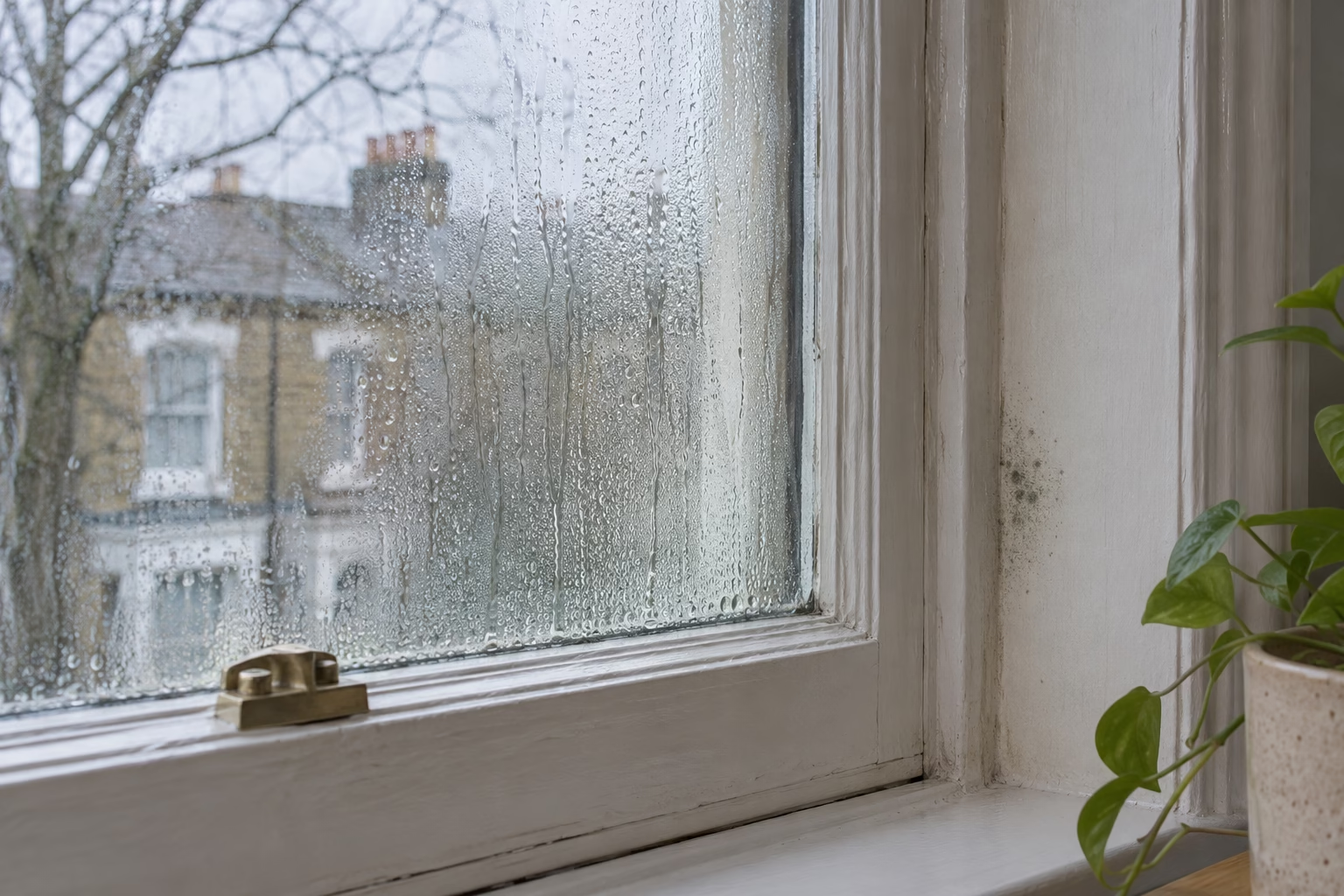
Everyday activities add moisture to indoor air. Cooking, bathing and drying laundry can raise humidity, especially when moist air cannot leave the property effectively. When that air meets a colder surface, water may collect there. Window reveals, external corners and walls behind closely placed furniture can be affected. A room may look dry for much of the day while a surface becomes wet overnight. That repeated cycle is enough to explain why cleaning alone gives only a short improvement. Our condensation mould treatment page describes the assessment and treatment route for this pattern.
Check how the room is ventilated
Ventilation needs to remove moisture where it is produced. Ask whether the bathroom extractor runs properly, whether a kitchen hood actually vents outside and whether existing air inlets have been blocked. A fan that makes noise is not necessarily moving enough air. Also consider what happens when doors are closed and whether furniture prevents air moving around an external wall. These checks are part of understanding the room, not an invitation to blame its occupants. A building defect, inadequate heating or an undersized ventilation system may also need attention. Avoid installing equipment blindly before the likely moisture route is understood.
Leaks and water entry need separate attention
Recurring mould can also follow water from a pipe, roof, gutter or outside wall. A stain that changes after rainfall, damp plaster around a pipe run or damage close to a ceiling may need a different investigation from a cold bedroom corner. Even after the source is repaired, wet materials may take time to dry. Covering a still damp surface can conceal the problem for a while without resolving it. Where rain seems connected to the damage, a penetrating damp inspection can help clarify which parts of the building need checking.
Material condition changes the treatment
A sound painted surface, loose wallpaper and crumbling plaster do not respond in the same way. If the finish is breaking down, simply wiping or painting over it may leave damaged material in place. Porous items close to the affected wall can also hold moisture. The assessment should identify what can be cleaned, what might need removal and which repair sits outside the mould treatment itself. That distinction matters when comparing quotes. One contractor may be describing surface remediation while another includes plaster work or decoration. Ask for the affected area and exclusions to be stated clearly before work begins.

Why repainting can create a false sense of progress
Fresh paint can make a room look reassuring, but it is a finish rather than a moisture investigation. If the wall remains damp, staining or growth may return through or around the new coating. Paint also makes it harder to compare the original pattern with later changes if nobody recorded it first. Before decorating, confirm that the source has been addressed, the affected material is suitable for finishing and the surface has had enough time to dry. This does not mean every mark requires extensive building work. It means the scope should follow the actual condition, not the wish to make the patch disappear quickly.
Use the location to frame better questions
A window reveal often raises questions about condensation, airflow and the temperature of the frame and surrounding wall. A patch below a plumbing connection raises questions about leaks. Low level staining may prompt checks around ground moisture, external levels and the wall construction; its position alone is not a diagnosis of rising damp. More than one factor can affect a room at the same time. Our window mould treatment page explains the details worth recording around frames and reveals. A wider moisture inspection is useful when the pattern is uncertain or several rooms are affected.
What to do before an assessment
Keep the area accessible, but do not pull apart finishes or move heavy furniture without discussing it first. Gather photographs of earlier appearances and note any cleaning, leak repairs, extractor changes or redecorating already attempted. If the property is rented or managed, identify who can provide access and who will receive the findings. Mention any active water escape promptly so the appropriate repair can be arranged; mould treatment is not a substitute for stopping a live leak. A clear history saves time during the visit and helps separate a one off incident from a repeating condition.
When to ask for a closer look
Arrange a detailed assessment when growth returns, the affected area expands, several rooms develop marks or the plaster remains damp. The same applies when a previous repair has not changed the pattern. Describe what you can see without guessing at a species or hidden defect. A visit may involve checking surfaces, ventilation and moisture conditions, then deciding whether further access or a repair is needed. The answer might be simple, but an inspection should be able to explain why that answer fits this property and what remains uncertain.
Judge the result by what happens afterwards
Successful work needs more than an immediately clean appearance. The proposed treatment should explain the affected surfaces, the suspected moisture source, any uncertainty and the practical steps that follow. Keep a record of repairs and watch the area over the conditions in which the problem previously appeared. A winter corner cannot be meaningfully assessed only on a warm, dry afternoon. If marks return, report the timing and location rather than simply repeating the same treatment. For visible growth that needs professional attention, the mould removal service can be considered alongside investigation of the moisture that allows growth to recur.