Diagnosis & Assessment
Is a Dark Patch Mould or a Damp Stain?
A dark mark cannot be diagnosed by colour alone. See which observations help distinguish surface growth, water staining and an active moisture problem.
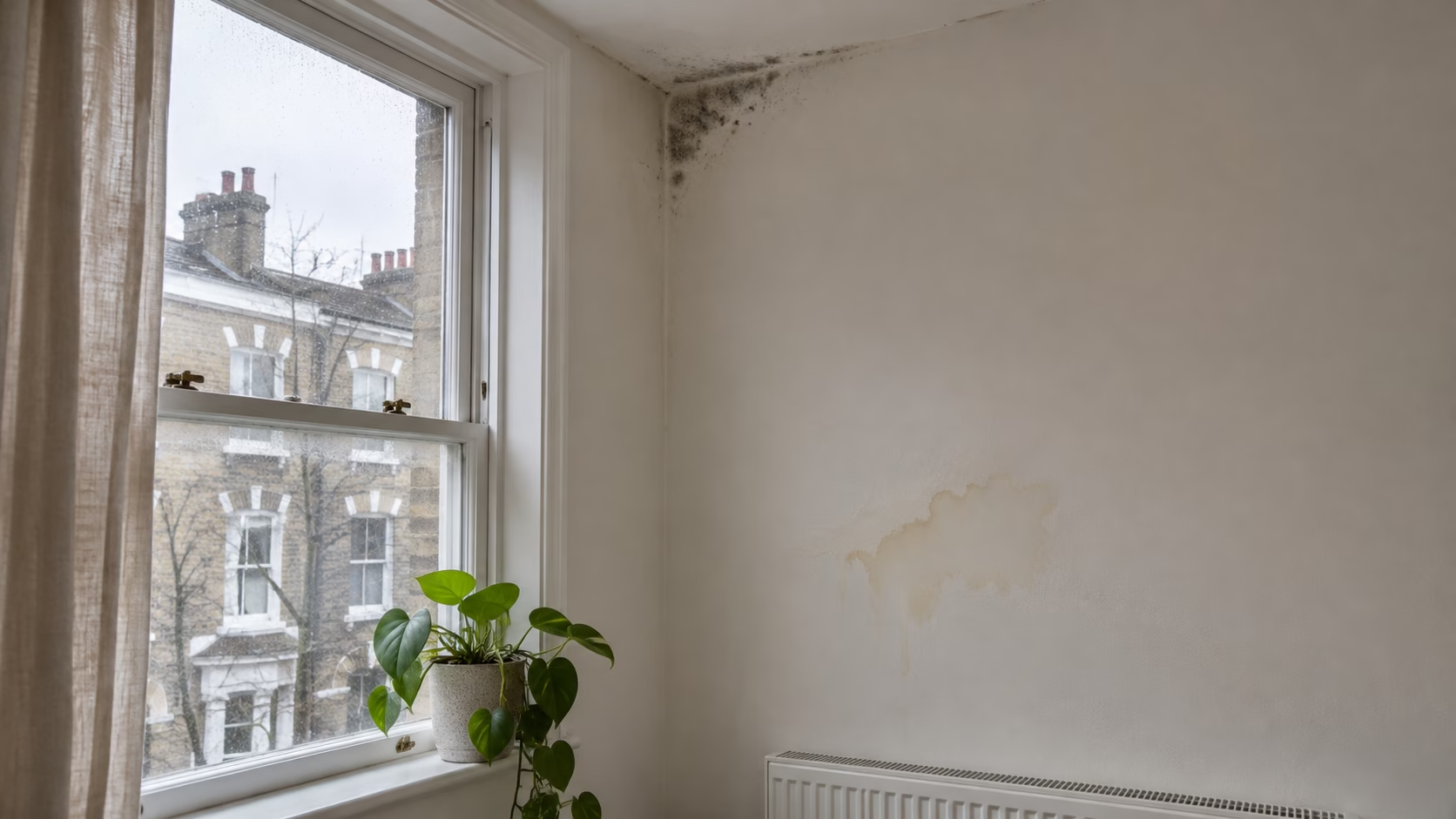
Start with what the mark actually shows
A dark patch on a wall can be alarming, but its colour is not a reliable diagnosis. It may be surface mould, staining from water, damaged paint, soot, or a combination of these. A photograph rarely settles the question because it cannot show how the material feels, what lies behind it, or whether moisture is still present. Before deciding on cleaning or decoration, record the mark’s position and the condition of the surrounding finish. A useful description says where it is, when it appeared and what has changed. It does not need to name a cause that has not yet been established.
What visible growth can look like
Mould can form scattered spots or a broader uneven patch on a surface that stays damp. It may appear around a window, on an external corner, behind furniture or on a bathroom ceiling. Its appearance varies with the material and conditions, so a dark colour alone cannot identify a species or tell you how the moisture arrived. Nor does a pale patch prove that the area is harmless. If growth has returned after cleaning, focus on the repeated wetting. An assessment should consider both the affected surface and the conditions that allow the mark to develop.
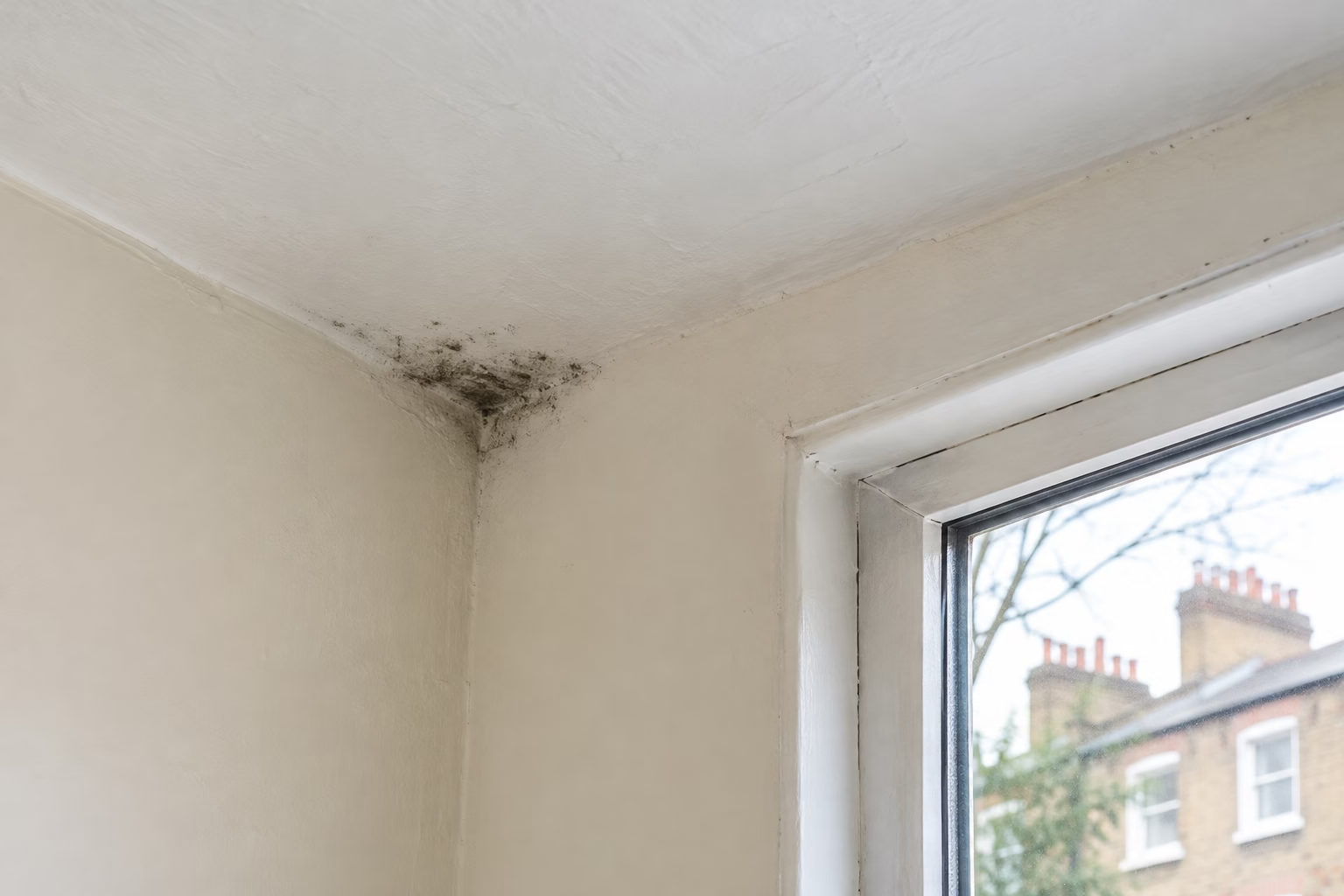
What a water stain can tell you
Water staining often changes the colour of plaster, paint or paper without showing obvious surface growth. The edge may follow the route of a leak, but patterns are not always tidy. A ceiling mark can remain long after a repaired leak, while a new leak can hide behind a finish before a stain appears. Touch and smell are imperfect clues too: a surface may feel dry after the most recent wetting yet still have a recurring source nearby. Look for lifting paint, soft plaster, swollen timber or changes after rain or water use. Those details can guide a damp and moisture inspection.
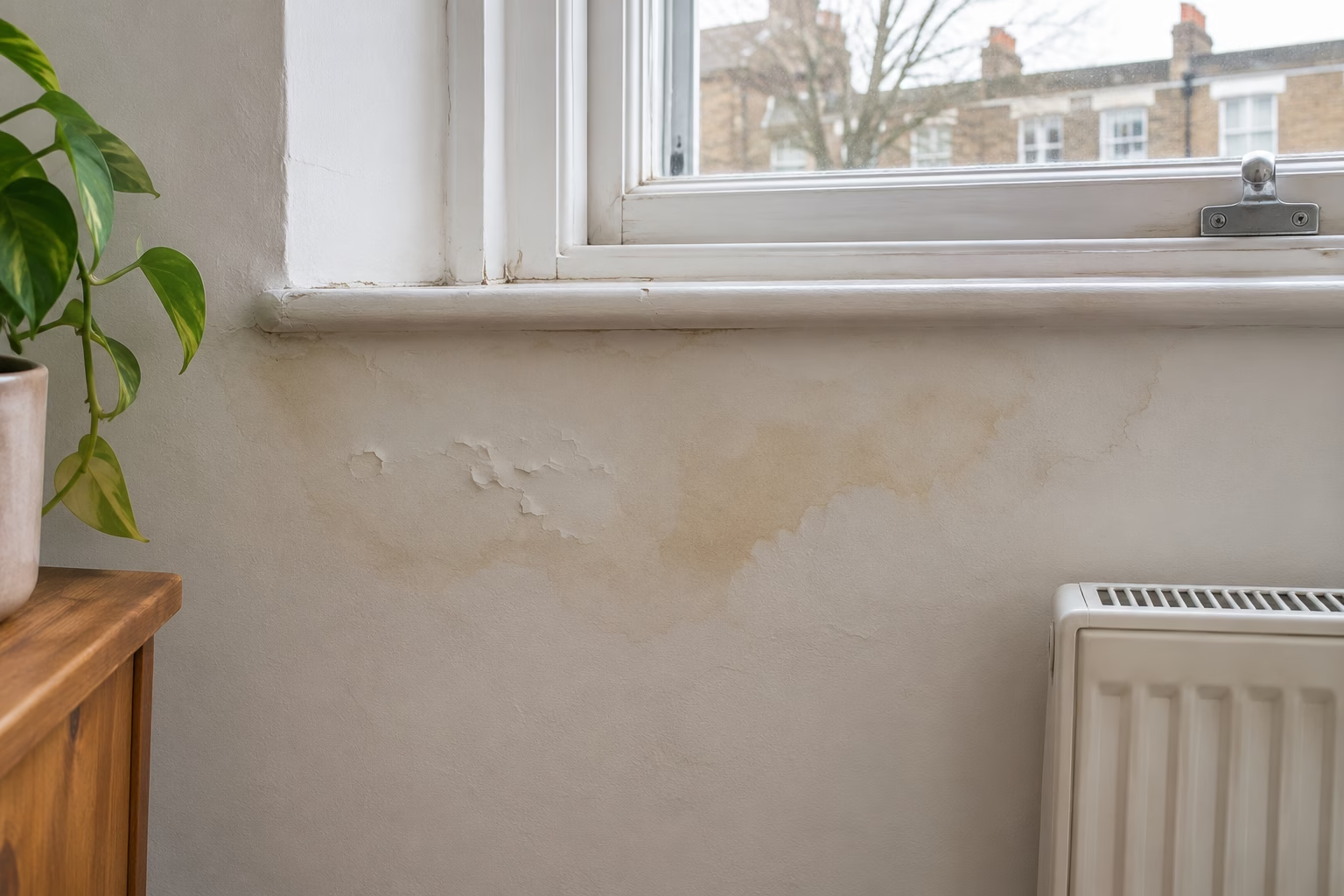
Why the two can occur together
A water stain and mould are not mutually exclusive. A pipe leak may discolour a wall and leave it damp enough for growth to develop. Condensation can wet a cold surface repeatedly and eventually damage paint as well as produce visible spots. Treating only what is on top risks missing the route by which moisture reaches the material. Equally, identifying a stain does not mean every dark mark needs an invasive repair. The right next step depends on the extent, the history of the room and whether the moisture source appears active.
Check timing, not just shape
Ask when the mark becomes more obvious. Does it deepen after heavy rain, following a shower in the room above, or during colder months? Does it fade in dry weather? Has it stayed unchanged since a known leak was fixed? A simple timeline can be more informative than a close photograph. Include previous repairs and whether anyone has painted over the area. If the mark developed after water escaped from a pipe, arrange the appropriate repair before surface work. If rain seems connected, a penetrating damp inspection may be relevant. Do not infer rising damp simply because the mark is low on a wall.
Read the surrounding room
One mark should not be viewed in isolation. Note nearby windows, external walls, plumbing, bathrooms and roof spaces. Check whether the room has functioning extraction and whether furniture sits tight against an outside wall. Condensation on glass, for example, provides useful context for a mark on the adjacent reveal, although it does not prove that the wall has no other problem. Where the issue is concentrated around frames, our window mould treatment page explains the questions worth asking about airflow and surrounding materials. Record what you observe before changing the room, so a specialist can see the original pattern.
Avoid the paint test
Painting over a dark area may hide it for a while, but that is not a dependable way to tell whether it was mould or a stain. New paint can make it harder to track the boundary and timing of the problem. Cleaning can have the same effect if no photograph or note is kept first. If you need to make the space usable, describe what you have done and when. Do not scrape loose material or pull back wallpaper merely to investigate. Disturbing an affected finish can make a small inspection more complicated, particularly when access and ownership of the property need to be agreed.
How an inspection narrows the possibilities
A useful inspection compares the visible mark with the building context. The investigator may check the affected material, nearby surfaces, moisture conditions and relevant building details. Moisture readings can help establish a pattern, but a single number should not be treated as a complete diagnosis. A finding should distinguish what was observed, what is most plausible and what remains uncertain. Sometimes the next step is a repair to a known leak. In other cases, further checks are needed before choosing treatment. Ask for the scope of any proposed investigation, especially when the mark could be linked to a concealed area or another flat.
Choosing the next service
If the main concern is visible growth on a sound surface, discuss the treatment scope and whether moisture conditions have been addressed. If the patch is damp, spreading or returning without an obvious cause, start with investigation. A deteriorated wall finish may need separate repair or decoration after the moisture problem has been understood. Our wall mould removal service deals with affected surfaces, while a survey concentrates on the source and pattern of moisture. These tasks may both matter, but they should be described separately in any recommendation or quote.
When the original mark has disappeared
Sometimes a mark is cleaned or painted before anyone can inspect it. Do not assume that the opportunity to understand it has gone. Earlier photographs, the date of treatment and a record of what happened afterwards still provide evidence. Check whether the same area becomes damp again, whether nearby finishes change and whether the room has a recurring moisture pattern. Keep the history factual. A dry surface today may be reassuring, but it does not by itself explain a stain that appears after each period of rain. Equally, an old photograph cannot establish that water is entering now.
Make your first enquiry specific
Send or bring one photograph of the whole wall, another of the mark and a short history of when it appeared. Mention whether the area is near a window, pipe, roof edge or external wall, and whether it changes after rain or room use. Say if a leak has already been repaired or a previous treatment has failed. In a rented property, identify who can arrange access and receive the findings. You do not have to decide whether the patch is mould or staining before asking for help. A careful description is enough to start the right conversation.